
1053 E Whitaker Mill Rd STE 115 Raleigh, NC 27604

(984) 777-5645

contact@technetuc.com
Follow us on :

(984) 777-5645
contact@technetuc.com
Follow us on :
by TechNet UC
In early May 2026, a massive ransomware and data‑extortion attack against Canvas, one of the world’s most widely used learning management systems, disrupted schools and universities across the United States and abroad. NBC’s Today Show reported that over 8,000 school districts and universities subscribe to the platform with 30 million students relying on it. For these institutions, Canvas is not a secondary tool. It is the digital backbone for coursework, grades, assignments, and communication between students and staff.
When Canvas went offline, the impact was immediate. Final exams were delayed. Coursework became inaccessible. And millions of users were left asking a troubling question. If a platform this large can be breached, what does that mean for the rest of us?
Canvas is a cloud‑based learning management system developed by Instructure. It is used by thousands of K‑12 districts, colleges, and universities to manage academic workflows and communication. Instructors post assignments and grades. Students submit work and message instructors. In many institutions, Canvas functions as the central nervous system of education operations.
According to multiple reports, including Krebs on Security and Cybernews, attackers tied to the criminal group ShinyHunters gained unauthorized access to systems associated with Instructure beginning around April 30, 2026. By May 1, Instructure confirmed a cybersecurity incident and began taking parts of Canvas offline while investigating and rotating credentials. [krebsonsecurity.com], [cybernews.com]
The attackers threatened to leak data unless a ransom was paid. Stolen information reportedly included names, email addresses, student ID numbers, and private messages exchanged within Canvas. Instructure stated that passwords, financial information, and government IDs were not affected, though the exposure of private communications raised serious concerns. [krebsonsecurity.com], [cybernews.com]
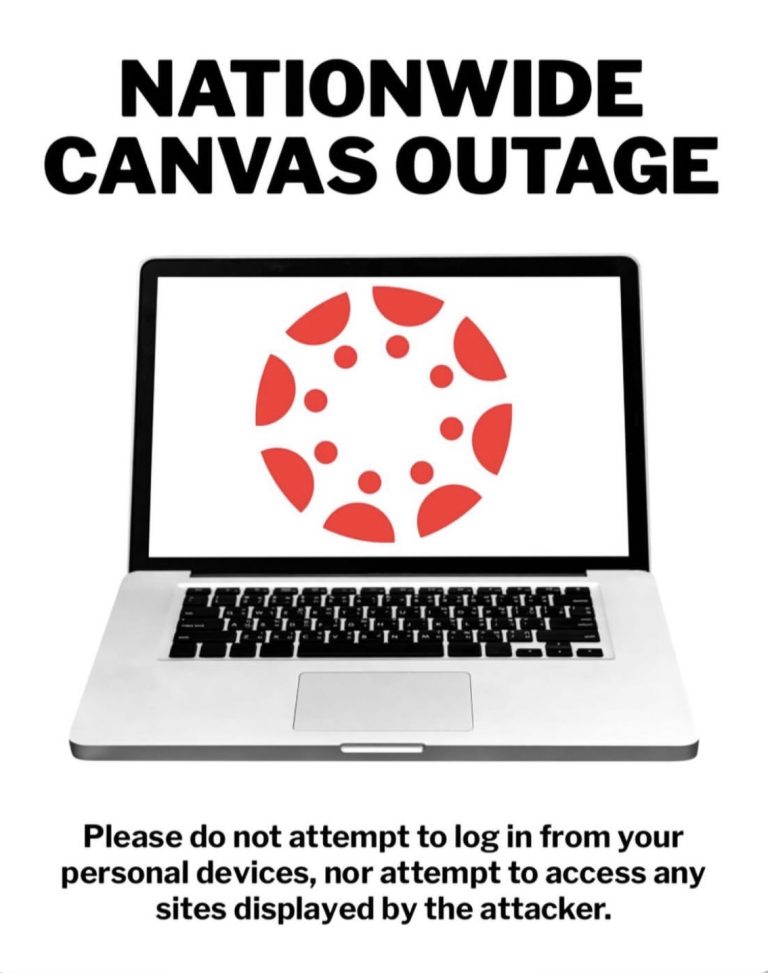
At the height of the incident, Canvas login pages displayed ransom messaging, forcing Instructure to temporarily disable access for thousands of institutions during one of the most sensitive periods of the academic calendar. [krebsonsecurity.com]
It is easy to read this story and think, “That’s an education problem.”
It is not.
The Canvas attack highlights a modern reality. Your organization’s risk surface is no longer limited to your own network. It now includes every cloud vendor, SaaS platform, and identity integration you rely on.
Think of your IT environment like an airport security checkpoint. You can have strong controls at your own gates, but if one critical terminal lets someone walk in unchecked, the entire facility is exposed.
The most dangerous assumption organizations make today is believing that cloud services are automatically secure because they are large, popular, or enterprise‑grade.
While investigations are ongoing, most large‑scale incidents like this share common contributing factors:
These are not failures of a single tool. They are failures of governance, visibility, and response coordination.
This is where modern Microsoft 365 security capabilities become critical.
Microsoft 365 is often thought of as email and collaboration software. In reality, it is one of the most comprehensive security platforms available to small and mid‑sized organizations when configured correctly.
Used properly, M365 provides layered defenses that make ransomware attacks far harder to execute and far easier to contain.
Many ransomware campaigns begin with identity misuse, not malware.
Microsoft Entra ID, formerly Azure Active Directory, allows organizations to enforce:
If credentials are the keys to the building, M365 replaces metal keys with smart locks that can revoke access instantly when something looks wrong.
Microsoft Defender for Endpoint continuously monitors device behavior and can identify ransomware activity before files are encrypted at scale.
Key protections include:
Instead of discovering an attack after data is gone, Defender is designed to stop attacks while they are still unfolding.
Email remains the most common entry point for ransomware and credential theft.
Microsoft Defender for Office 365 protects against:
In incidents like the Canvas breach, stolen email identities often lead directly to secondary attacks through phishing and impersonation. Email security is no longer optional.
Ransomware relies on leverage. Backups remove that leverage.
Microsoft 365 includes built‑in versioning and recovery capabilities for OneDrive and SharePoint that allow organizations to restore data quickly without paying attackers.
It is the difference between a disruption and a disaster.
Microsoft provides powerful capabilities. What it does not provide by default is strategy, configuration, and ongoing oversight.
That is where a trusted managed service provider is essential.
TechNet UC is a premier Microsoft Solutions Partner helping organizations design, deploy, and manage secure Microsoft 365 environments tailored to their real‑world risks.
Security is not about turning on features. It is about:
Without this operational layer, even the best tools can create a false sense of security.
If Microsoft 365 is the flight control system, TechNet UC is the experienced pilot who knows how to read the instruments when turbulence hits.
The Canvas attack affected schools, but the takeaway applies everywhere.
Healthcare organizations rely on cloud EHR systems. Professional services firms depend on document collaboration platforms. Manufacturers integrate cloud systems into supply chains.
Every organization today is one vendor breach away from a serious incident.
The question is not whether attackers are targeting your industry. It is whether you are prepared when they do.
Ransomware attacks do not succeed because organizations lack technology. They succeed because organizations lack visibility, discipline, and response readiness.
Microsoft 365, when paired with a security‑focused MSP, transforms security from an afterthought into an operating principle. TechNet UC helps:
The Canvas attack is not just another headline. It is a reminder that trust in the cloud must be earned through architecture and oversight, not assumed.
If your organization relies on Microsoft 365 and cloud platforms to run the business, now is the time to ask a simple question:
Are we secure by design, or secure by assumption?
TechNet UC can help you answer that question with confidence.
Schedule a security review and learn how to strengthen your Microsoft environment before the next headline involves your industry.
(984) 777-5645
contact@technetuc.com
1053 E Whitaker Mill Rd STE 115 Raleigh, NC 27604
Canada, STP IT Solutions Inc, 17 Mackenzie Cr, 1496, Pilot Butte, SK S0G3Z0
Technet UC Experts allow your employees to focus on driving business value. Talk to us today and we'll adise you on the best solutions for your business needs.
Get In Touch